Managed WordPress Hosting vs Shared Hosting
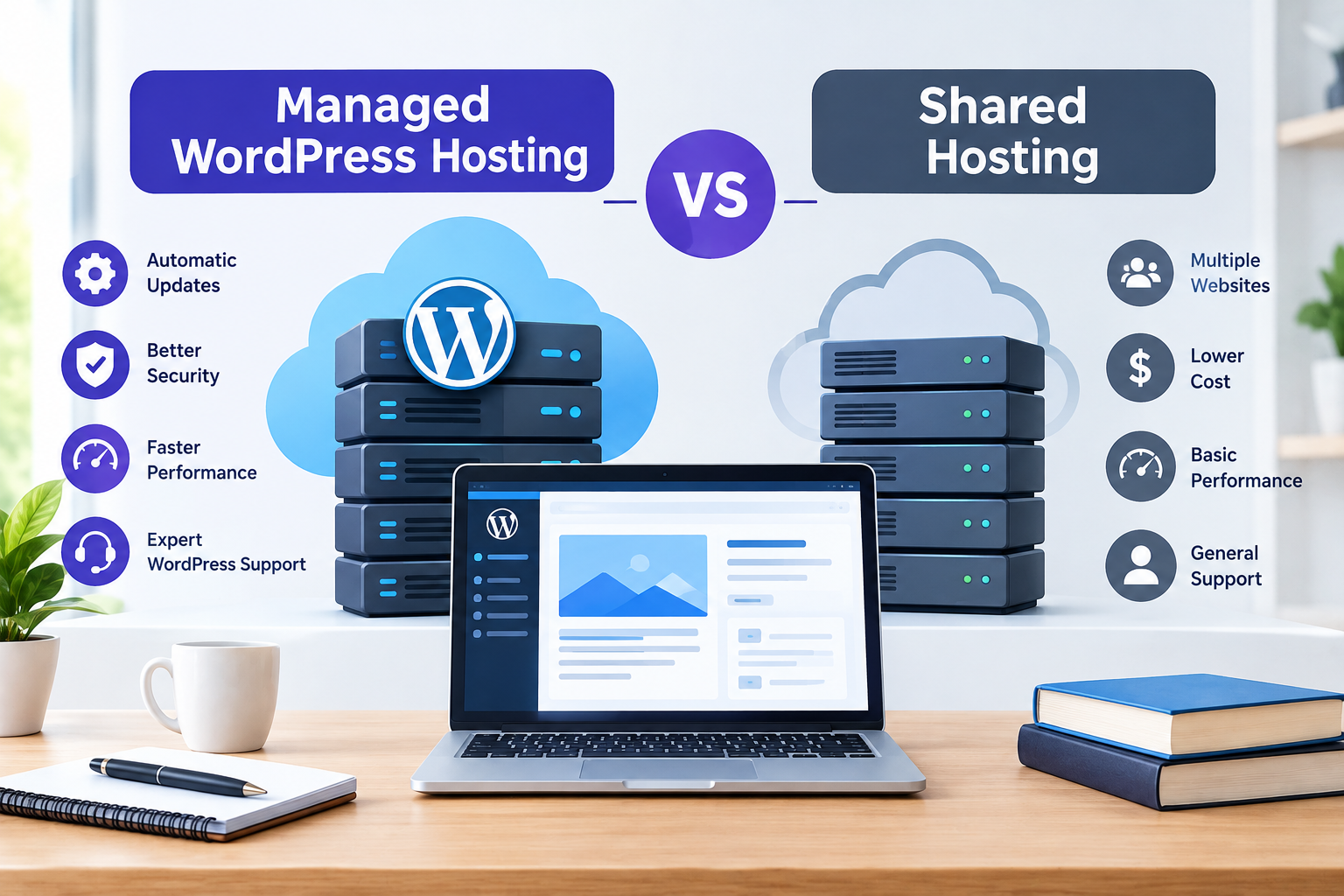
Managed WordPress hosting vs shared hosting is really a question about who handles the maintenance work behind your site. Managed hosting takes care of updates, security, and performance tuning for you. Shared hosting hands you the controls and a lower price.
This guide breaks down what each tier actually includes, using Hostinger‘s plans as a real example. Use it to figure out which fits your time, budget, and comfort level.
Disclosure: HostingPlanGuide earns a commission if you buy through our links, at no extra cost to you. We still note where managed hosting’s extra cost may not be worth it, so you can decide with the full picture.
Quick Answer: Managed vs Shared
Shared hosting is the more affordable, hands-on option, suited to most new and small sites. Managed WordPress hosting costs more but takes maintenance tasks off your plate, which matters more as a site grows busier or you have less time to spend on upkeep.
Managed WordPress Hosting vs Shared Hosting at a Glance
| Factor | Shared Hosting | Managed WordPress Hosting |
|---|---|---|
| Typical starting price | $2.99–$3.99/mo (Hostinger, 48-mo term) | Higher, varies by provider |
| WordPress core updates | You manage, or set to auto-update | Often handled automatically |
| Performance tuning | General caching and CDN included | Deep WordPress-specific tuning |
| Staging environment | Not always included | Usually included |
| Plugin flexibility | Full control | Sometimes restricted for security or performance |
| Best for | New sites, small budgets, hands-on owners | Busy sites, limited time, less technical comfort |
Hostinger shared hosting figures from its pricing page, October 2026, excluding VAT. Managed WordPress pricing varies widely by provider.

What Shared Hosting Actually Involves
On shared hosting, your site lives on a server alongside other websites, splitting the available resources. You control your own setup: installing WordPress, choosing plugins, and managing updates yourself, often with a one-click installer to simplify the first step.
Hostinger’s Premium and Unlimited plans are both shared hosting, and both include one-click WordPress installation, free SSL, a CDN, and built-in caching. You get meaningful WordPress support without paying for a fully managed tier.
What “Managed” Actually Means
Managed WordPress hosting takes several ongoing tasks off your hands. That typically includes automatic core and plugin updates, proactive security monitoring, performance tuning built specifically around WordPress, and often a staging site for testing changes safely.
In exchange for that convenience, managed plans usually cost more, and some restrict which plugins you can install, since certain plugins can conflict with the host’s own optimization layer.

The Real Trade-Offs
Time vs Cost
Shared hosting asks more of your time: installing updates, checking security, and troubleshooting issues yourself. Managed hosting trades a higher price for that time back. Whether that trade is worth it depends on how much your time is worth to you and how often problems actually come up.
Control vs Convenience
With shared hosting, you can install any plugin or theme you want, experiment freely, and configure things exactly how you like. Managed hosting sometimes limits this in the name of stability and security, which can feel restrictive if you like to tinker.
Performance at Scale
For a small to mid-sized site, well-configured shared hosting performs well. As traffic grows substantially, the deeper tuning in managed hosting can make a more noticeable difference, particularly under heavy, sustained load.
Who Should Choose Shared Hosting
- You’re building your first website and want to keep costs low while you learn.
- You don’t mind handling updates yourself, especially with WordPress’s own auto-update option turned on.
- You want full control over plugins, themes, and configuration.
- Your site gets low to moderate traffic that a well-optimized shared plan handles comfortably.
Who Should Choose Managed WordPress Hosting
- You run a business site where downtime or a hack carries real financial cost.
- You have little time or technical comfort for handling updates and security yourself.
- Your site gets high, steady traffic that benefits from deeper performance tuning.
- You want a staging environment built in, to test changes before they go live.
Not sure where your project falls? Our guide to the best cheap hosting for a new website covers the shared hosting side of this decision in more depth.

A Middle Ground: Shared Hosting With Good Defaults
Not every site needs the jump straight to fully managed hosting. A well-built shared plan with built-in caching, a CDN, and one-click WordPress installation covers much of the convenience gap, without the higher managed price tag.
Hostinger’s shared plans fall into this middle ground. For most new and small to mid-sized WordPress sites, that combination covers the real day-to-day needs, with managed hosting becoming worth considering only once traffic or complexity grows significantly.
People Also Ask: Managed WordPress Hosting vs Shared Hosting
Is managed WordPress hosting worth the extra cost?
It depends on your traffic, technical comfort, and how much your time is worth. Busy business sites with little time for maintenance often benefit most; smaller sites may not need the extra features yet.
Can I switch from shared hosting to managed hosting later?
Usually yes, though it typically involves migrating your site to a new host or plan. Many providers offer migration assistance to make this smoother.
Does managed hosting mean I don’t need to do anything myself?
It reduces your workload significantly, but you’ll still want to monitor your site, write content, and make decisions about plugins and design. Managed hosting handles the technical maintenance, not the content.
Is shared hosting safe enough for a WordPress site?
Yes, when it includes solid baseline security like free SSL and malware scanning. Combined with good habits on your end, like strong passwords and regular updates, shared hosting handles most sites’ security needs well.
Why do some managed hosts restrict plugins?
Certain plugins can conflict with a host’s own caching or security systems, or create performance issues at scale. Restrictions aim to keep the overall environment stable, though they can feel limiting if you want full flexibility.
How much more does managed WordPress hosting typically cost?
Pricing varies significantly between providers, generally costing more than comparable shared hosting plans. Compare specific plans directly, since the gap differs a lot depending on which hosts you’re weighing.
Final Verdict: Managed WordPress Hosting vs Shared Hosting
Shared hosting gives you control and a lower price, with the trade-off of handling more maintenance yourself. Managed WordPress hosting costs more but takes that maintenance off your plate, which matters most for busy, high-traffic, or time-constrained site owners.
For most new and small to mid-sized sites, a well-built shared plan like Hostinger’s Premium or Unlimited, with built-in caching and a CDN, covers the real needs without the higher managed price. Revisit managed hosting once your site’s traffic or complexity genuinely outgrows that setup.