How Much Does Web Hosting Really Cost in 2026?
The honest answer to how much web hosting really costs in 2026 depends on which number you’re looking at: the price on the homepage, or the price you’ll actually pay by year two. Almost every host advertises a low introductory rate, and almost every host renews at a noticeably higher one. Understanding that gap is the difference between budgeting accurately and getting an unpleasant surprise later.
Below, we break down real pricing by hosting type, show you what a full first-year cost actually looks like once you add a domain and extras, and flag the renewal traps worth watching for. You’ll also find answers to the questions people ask most when budgeting for hosting.

Web Hosting Costs by Type in 2026
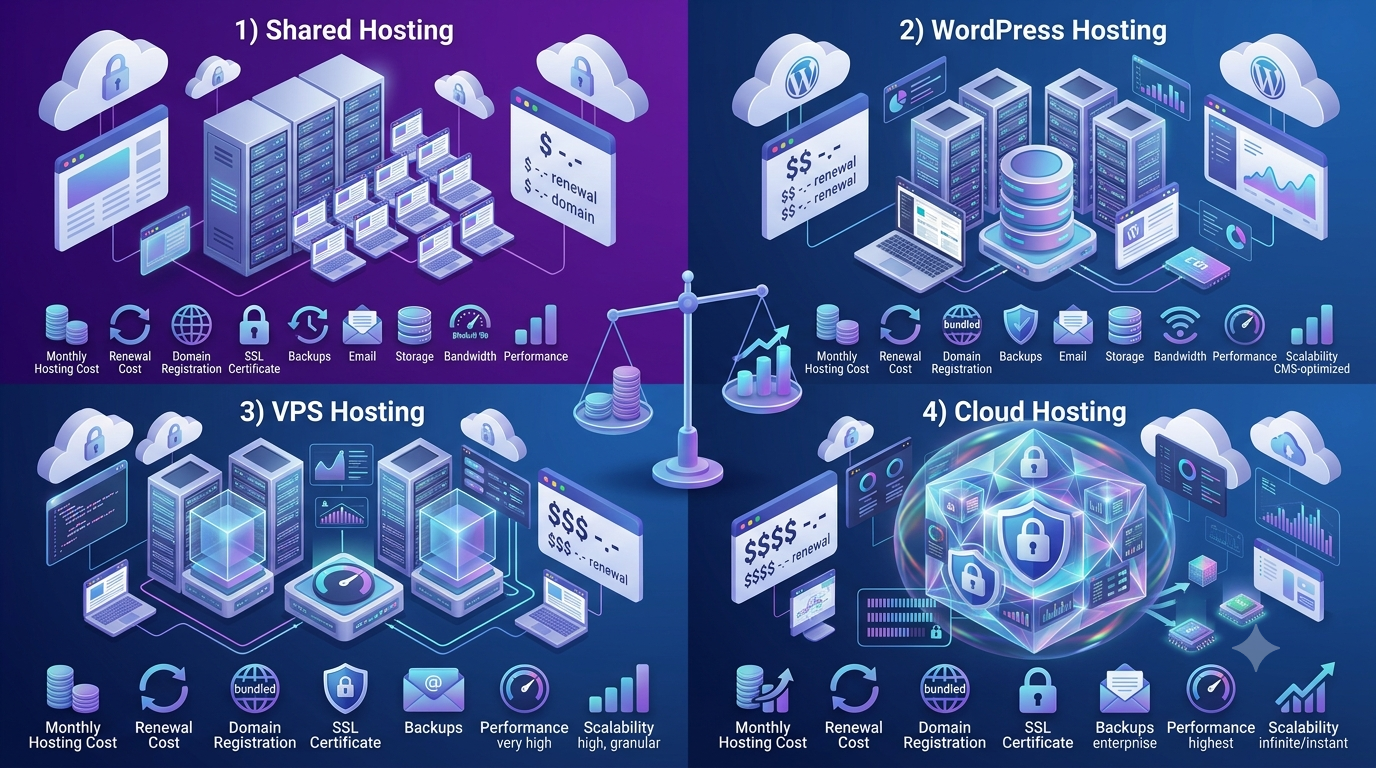
Your hosting type is the single biggest factor in what you’ll pay. Here’s a realistic range for each:
| Hosting Type | Typical Intro Price | Typical Renewal Price | Best For |
|---|---|---|---|
| Shared hosting | $2–$10/mo | $8–$16/mo | Beginners, blogs, small sites |
| WordPress hosting | $3–$25/mo | $10–$35/mo | WordPress-based websites |
| Cloud hosting | $10–$30/mo | $15–$50+/mo | Growing sites, traffic spikes |
| VPS hosting | $7–$30/mo | $15–$70/mo | More control, custom software |
| Dedicated hosting | $80–$150/mo | $150–$500+/mo | Large, high-traffic websites |
Figures reflect typical industry ranges as of 2026 and vary by provider, plan length, and included resources.
Why the Advertised Price Isn’t the Real Price
Nearly every hosting provider prices its plans the same way a subscription free trial works: a low rate to get you signed up, followed by a standard rate once that period ends. It’s common to see a budget host advertise around $2.95/month, only to renew closer to $12/month, which works out to roughly a 300% increase.
That renewal jump is usually tied to two things: the length of your initial term, and whether you paid upfront. A 48-month prepaid plan almost always advertises the lowest possible monthly rate, but that rate applies only to the term you paid for. Before checking out, always look for the renewal price listed near the checkout page, since it’s often shown in smaller text than the headline discount.
What a Full First Year of Hosting Actually Costs
The hosting plan itself is rarely the only cost. Here’s what typically adds to your total:
- Domain name: Often free for the first year when bundled with hosting, then $10–$20/year afterward.
- SSL certificate: Usually free with modern hosts, though some still charge $20–$80/year for premium SSL products you likely don’t need.
- Domain privacy protection: Hides your personal WHOIS information. Often free, but some hosts charge a small yearly fee for it.
- Professional email: Sometimes bundled free, otherwise typically $1–$5/month per mailbox.
- Site builder or premium themes: Optional, but can add $5–$20/month if you choose a paid tier.
Put together, a simple blog or portfolio site can realistically launch and run for well under $100 in the first year on a budget host, especially with a free domain and free SSL bundled in. A small business or store site, once you add email and any premium tools, typically lands somewhere between $150 and $400 for the year.
A Real Example: Hostinger’s Pricing Breakdown
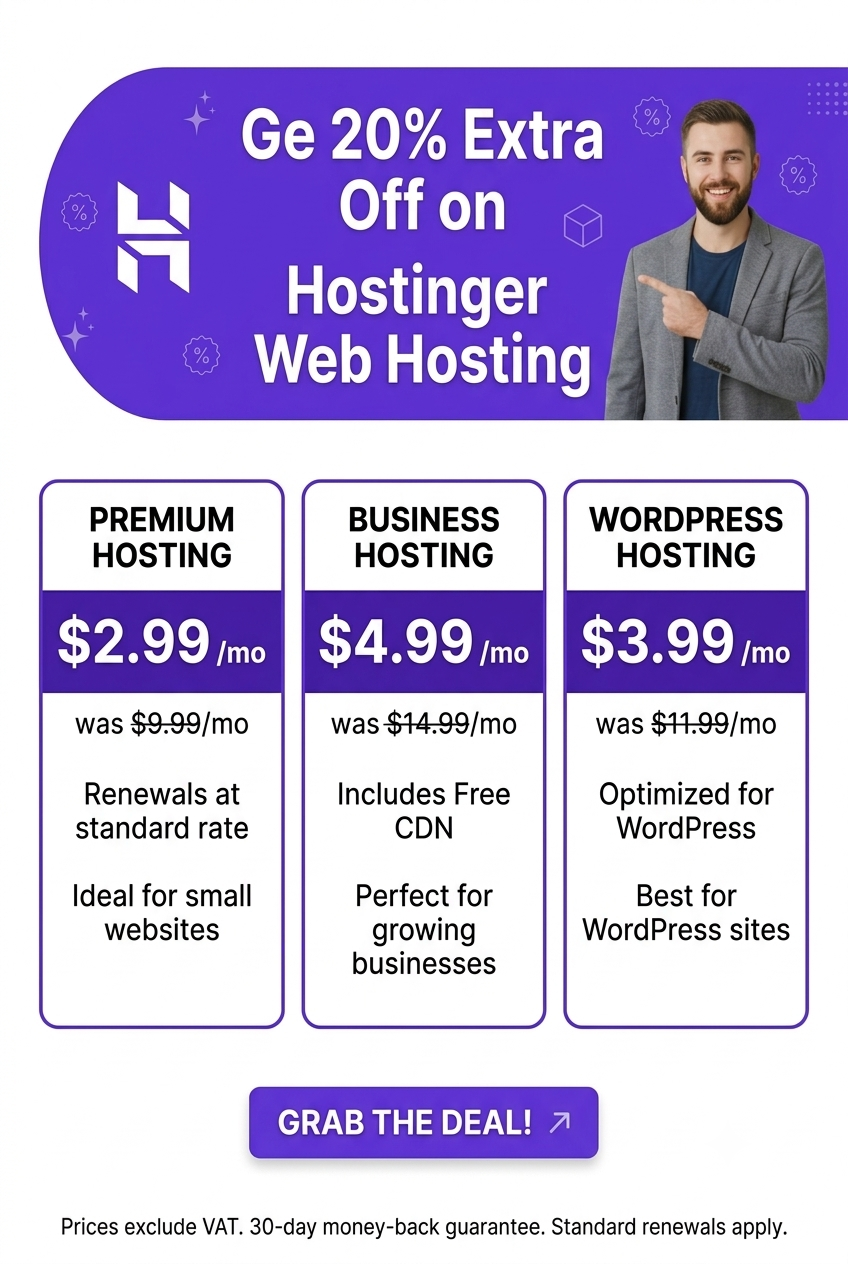
To make this concrete, here’s what a real, current pricing structure looks like. Hostinger’s plans, on a long-term commitment, break down like this:
- Premium — around $2.99/month: Supports multiple websites, 20 GB SSD storage, and weekly backups. A solid starting point for a first site.
- Business — around $3.79/month: Adds unlimited websites, 50 GB NVMe storage, daily backups, a CDN, and staging tools, useful once you’re managing content more seriously.
- Cloud Startup — around $7.99/month: Dedicated resources built for higher-traffic WordPress and WooCommerce sites that have outgrown shared hosting.
All Hostinger plans include a free domain for the first year, free SSL, and a 30-day money-back guarantee, which covers most of the “extra” costs mentioned above before you even factor them in separately.
How to Avoid Overpaying for Hosting
- Always check the renewal price before you buy, not just the introductory rate shown on the homepage.
- Don’t overpay for shared hosting. Once a shared plan costs more than about $5–$10 per month, a VPS plan often delivers better value for the same money.
- Skip premium SSL unless you need it. Free SSL provides the same core encryption as paid options for the vast majority of websites.
- Watch for pre-checked add-ons at checkout, like domain privacy or backup upgrades, which quietly increase your total.
- Match your term length to your confidence in the project. Longer terms lower your monthly rate but lock in a bigger upfront payment.
People Also Ask
How much does web hosting cost per month in 2026?
Shared hosting typically costs $2 to $10 per month on an introductory rate, WordPress hosting runs $3 to $25, VPS hosting is generally $7 to $30, and dedicated hosting starts around $80 per month. Renewal prices are usually higher across every category.
Why does my hosting renewal price jump so much?
Hosts use a low introductory rate to attract new customers on longer-term plans, similar to a subscription free trial. Once that initial term ends, billing switches to the standard rate, which can be two to three times higher than the advertised price.
Is free web hosting worth using instead of paying?
Generally not for a serious website. Free hosting typically comes with a subdomain instead of your own domain, ads you can’t control, limited storage, and weaker support. A low-cost paid plan offers far more flexibility for a small added cost.
What’s included in the price of most hosting plans?
Most modern plans include storage, bandwidth, a free SSL certificate, and often a free domain for the first year. What varies most between providers is backup frequency, support quality, and whether a CDN is included.
Should I pay monthly or commit to a long-term hosting plan?
Long-term plans, usually 12 to 48 months, offer the lowest monthly rate but require a larger upfront payment. Monthly billing costs more per month but limits your risk if you’re not yet sure the project will stick around.
Final Takeaway
Web hosting in 2026 is genuinely affordable to start, often under $100 for a full first year once you factor in a free domain and free SSL. The real cost only bites people who skip reading the renewal price. Hostinger is a solid example of transparent, competitive pricing across its tiers, with plans that scale from a first blog up to a growing WooCommerce store. Whichever host you choose, check the year-two price before you commit, and you’ll avoid the most common budgeting mistake in hosting.