Cheap Hosting vs Premium Hosting: What Do You Really Need?
Every hosting comparison eventually comes down to the same question: is it worth paying more? The honest answer to cheap hosting vs premium hosting is that it depends entirely on what your site actually does. A $2/month plan and a $30/month plan aren’t really competing for the same customer — they’re built for different stages of a website’s life. Here’s how to tell which one actually fits yours.
What “Cheap” and “Premium” Actually Mean
Cheap hosting usually refers to entry-level shared plans priced under $5 a month, where your site sits on a server alongside hundreds of others and shares CPU, RAM, and bandwidth. Premium hosting covers everything from higher-tier shared plans to managed cloud and VPS hosting, where you get dedicated or guaranteed resources, faster support, and more built-in tools. Neither label is inherently “better” — the right choice depends on your traffic, your technical comfort level, and what happens if your site goes down for an hour.
Comparison Table: Cheap Hosting vs Premium Hosting
| Factor | Cheap Hosting | Premium Hosting |
|---|---|---|
| Typical Price | $1–$5/month | $15–$50+/month |
| Server Resources | Shared with many sites | Dedicated or guaranteed allocation |
| Backups | Weekly or basic | Daily, often automated restore |
| Security | Basic firewall, free SSL | Advanced firewall, malware scanning, DDoS protection |
| Support | Live chat/email, slower response | 24/7 priority chat, phone, faster resolution |
| Scalability | Limited, often needs migration to grow | Built-in upgrade paths, handles traffic spikes |
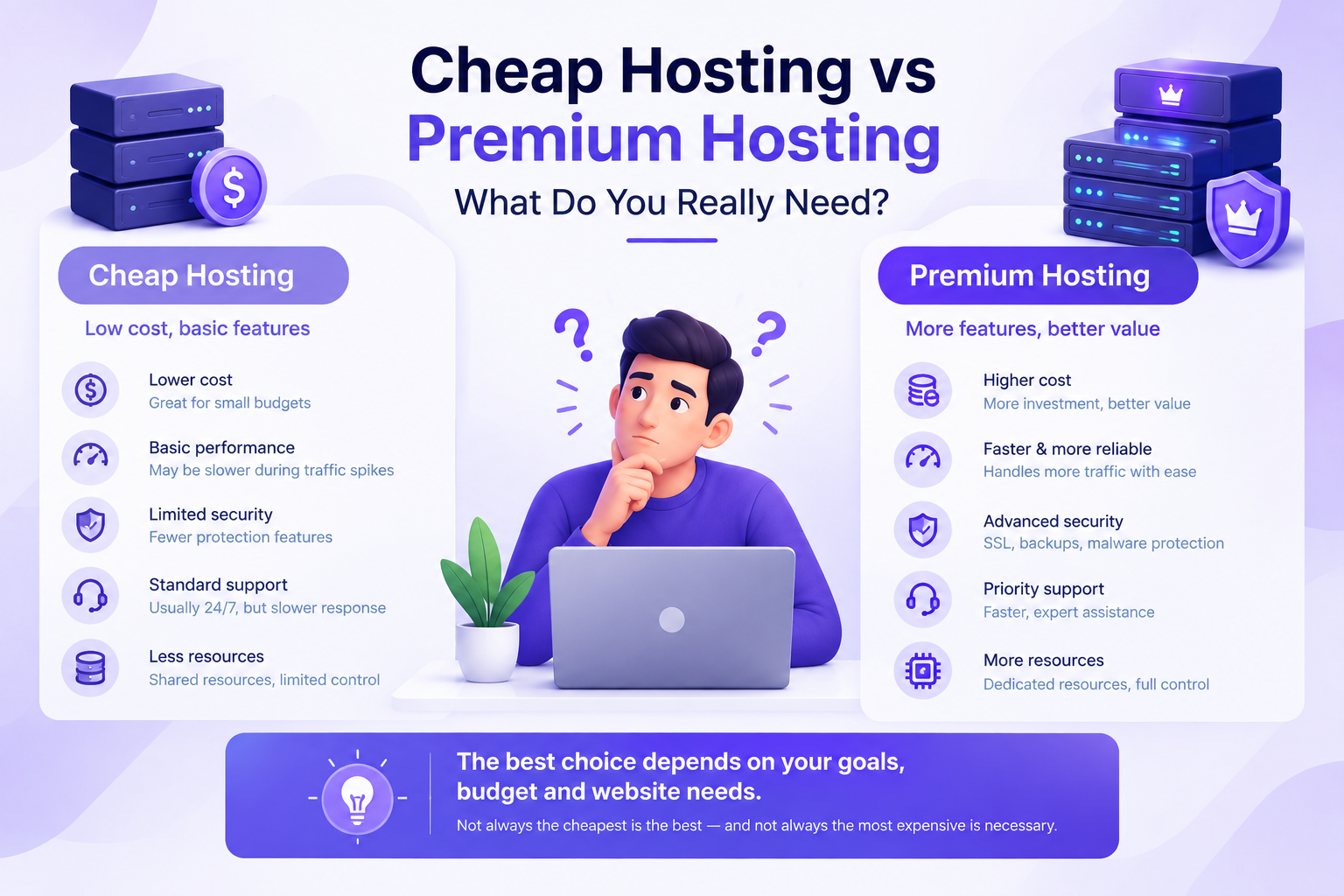
Where the Real Differences Show Up
Performance and Speed
On cheap hosting, your load times depend partly on your neighbors — a traffic spike on another site sharing your server can slow yours down too. Premium hosting reduces or eliminates that risk with dedicated resources and, often, built-in CDN and caching that keep pages fast even during your own busy periods.
Security
Budget hosting typically covers the basics: a firewall and free SSL. Premium plans layer on malware scanning, DDoS protection, and more frequent automatic updates — details that matter a lot more once your site is taking payments or storing customer data.
Support Response Time
This is often the most noticeable difference in practice. Cheap plans can leave you waiting on a ticket queue when something breaks, while premium hosting generally gets you a knowledgeable person faster — which matters a lot more when downtime is actively costing you visitors or sales.
Room to Grow
Cheap hosting plans tend to hit a wall — once you outgrow them, you’re often looking at a full migration rather than a simple upgrade. Premium and cloud-based hosting is usually built with upgrade paths in mind, so adding resources doesn’t mean starting from scratch.

So, What Do You Actually Need?
If you’re running a personal blog, portfolio, or a brand-new site that’s still finding its footing, cheap hosting is genuinely fine — a reliable budget host like Hostinger’s entry plan covers SSL, backups, and 99.9%+ uptime without over-spending on features you’re not using yet. Premium hosting starts to earn its price once your site is generating revenue, handling customer data, seeing regular traffic spikes, or simply can’t afford the downtime a budget plan risks. The mistake to avoid isn’t choosing cheap hosting — it’s staying on it long after your site has outgrown what it can reliably handle.
People Also Ask
Is cheap hosting bad for SEO?
Not inherently, but slow load times or frequent downtime — more common on lower-quality cheap hosts — can hurt Core Web Vitals scores, which do factor into search rankings. A reliable budget host with good uptime avoids this issue.
When should I upgrade from cheap to premium hosting?
Common signs include rising traffic that slows your site down, frequent downtime, plans to sell products online, or simply needing faster, more reliable support than a budget plan provides.
Is premium hosting worth it for a small blog?
Usually not right away — most small blogs run perfectly well on a reliable cheap hosting plan, and upgrading only becomes worthwhile once traffic or monetization grows enough to justify the extra cost.
What’s the biggest risk of staying on cheap hosting too long?
The main risk is being caught off guard by a traffic spike or security issue that a budget plan isn’t equipped to handle, resulting in downtime or a security incident right when your site can least afford it.
Does premium hosting guarantee better uptime?
It generally improves your odds through dedicated resources and better infrastructure, but uptime still varies by provider — checking a host’s actual tested uptime record matters more than assuming “premium” automatically means flawless reliability.
Final Verdict
Cheap hosting isn’t a compromise for every site — it’s the right tool for a huge number of them, as long as you pick a provider with a genuinely solid uptime track record rather than the absolute lowest price you can find. Premium hosting earns its cost once your site’s traffic, revenue, or downtime risk grows past what a budget plan can comfortably support. The smartest approach is starting where your site actually is today, and upgrading when the numbers — not the marketing — tell you it’s time.